
You’re about to give to a charity, and you want to know it is what it says it is. Learning how to read a Form 990 is the most direct way to check. The 990 is the annual return most tax-exempt organizations file with the IRS, and it is a public document.
It shows what a charity says it does, who runs it, and where its money went. The short answer: find the return on the IRS or ProPublica website, then read five parts of it: Part I, Part III, Parts VI and VII, Parts VIII and IX, and Schedule A. You don’t need an accounting background to use one.
You need three things: where to find the return, which five parts to open, and what a small charity’s filing will never show you. This guide covers all three, in the order you’ll use them. It’s written for donors, not for the people who prepare the form, so it skips the filing rules and goes straight to what a reader can learn.
What Is Form 990, and Who Files One?
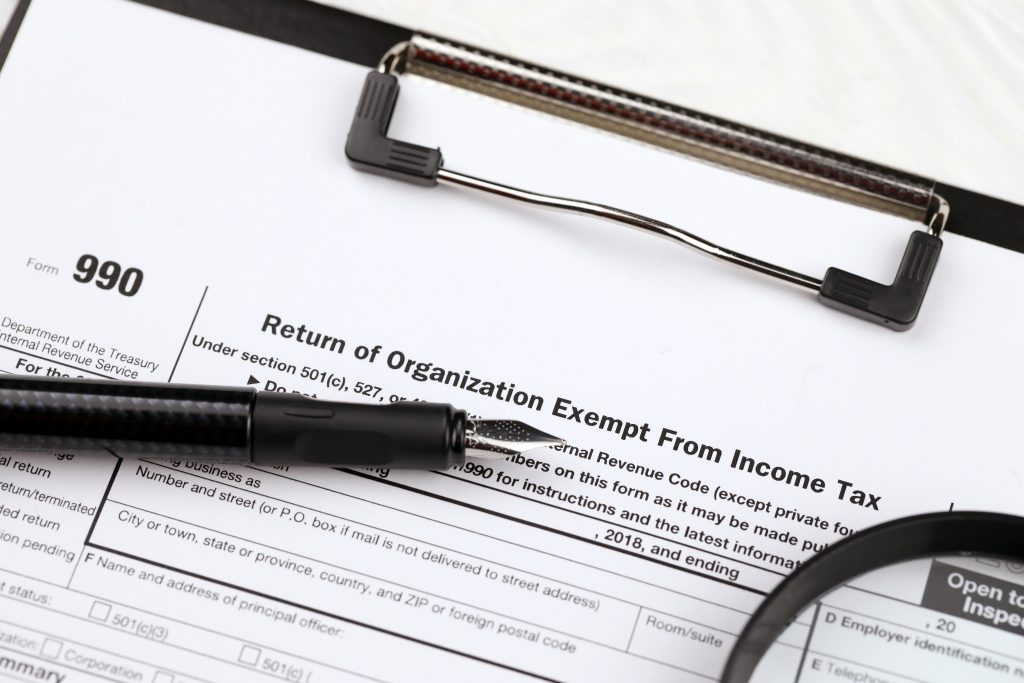
What is Form 990? It’s an annual information return. According to the BBB Wise Giving Alliance, it covers a charity’s activities, finances, governance, compensation and other practices.
Which version a charity files depends on its size. The IRS filing chart sets the lines:
- Form 990-N (the e-Postcard): gross receipts normally $50,000 or less.
- Form 990-EZ: gross receipts under $200,000 and total assets under $500,000.
- Form 990: gross receipts of $200,000 or more, or total assets of $500,000 or more.
- Form 990-PF: private foundations, whatever their size.
Some organizations don’t file at all. Churches, their integrated auxiliaries, and conventions or associations of churches are excepted from the annual return, according to the IRS list of who must file. So a church with no 990 is following the rule, not hiding anything.
Two disclosure rules matter to a donor. A charity must make its annual returns available for public inspection for three years, counted from the due date. And apart from private foundations, it does not have to disclose the names and addresses of its contributors, as the IRS explains on its public disclosure page.
IRS 990 Lookup: Where to Find a Charity’s Return

You can find most nonprofit Form 990 filings free, in one of three places.
1. IRS Tax Exempt Organization Search
This is the official IRS 990 lookup. The Tax Exempt Organization Search shows Form 990-series returns, e-Postcards and determination letters. It also confirms whether an organization is eligible to receive tax-deductible contributions, and lists organizations whose exemption was automatically revoked.
One caution: the IRS says its updates are delayed while it processes paper-filed returns received in 2021 and later. A return that isn’t on the site may simply not be processed yet.
2. ProPublica Nonprofit Explorer
Nonprofit Explorer is free and searchable by organization or by person. It links full Form 990 documents and lets you search the text of filings, which makes a ProPublica 990 search the quickest way to compare a charity’s numbers across years. It does not include organizations that file only the e-Postcard.
3. The charity itself
Because the return must be available for inspection, asking for a copy is a reasonable request. How a charity answers that request tells you something too.
If you’d like a summary before the full return, a charity’s free Candid profile pulls much of the same information onto one page.
How to Read a Form 990 in Five Stops

A full IRS Form 990 runs to a dozen pages before the schedules. You don’t need all of it. These five stops answer most of what a donor wants to know.
Stop 1: Part I, the summary
Part I is a one-page snapshot. It gives the mission, the size of the governing body, the number of employees and volunteers, and the year’s revenue and expenses beside the prior year’s.
Check two things here. Does the mission match what you want your gift to do? And do the two years look alike? A big swing isn’t a problem in itself, but it’s a question worth asking.
Stop 2: Part III, what the programs did
Part III describes the organization’s three largest programs, measured by expenses, with what each one cost. The BBB Wise Giving Alliance treats vague or unclear statements here as a red flag.
Look for specifics: who was served, what was delivered, where. A paragraph that could describe any charity in America tells you very little about this one.
Stop 3: Parts VI and VII and Schedule L, who runs it
Part VI covers governance. It reports how many voting board members there are and how many are independent. It asks whether any officer or director has a family or business relationship with another, and whether the charity has a written conflict of interest policy.
Read Schedule O alongside it. Schedule O is where the charity explains its answers, such as how the board reviews the return before it’s filed.
Part VII lists officers, directors and key employees with their pay. Many small charities are run by volunteer boards and report $0 here, which is normal. Schedule L, where it’s attached, reports business dealings and loans between the charity and its insiders.
Stop 4: Parts VIII and IX, money in and money out
Part VIII shows where revenue came from: contributions, program service revenue and investment income. Part IX, the statement of functional expenses, splits spending into program services, management and general, and fundraising.
Donors take that split seriously. In a 2014 field experiment published in Science, 8.55% of people gave when told a private donor had already covered the overhead, against 3.36% of those who got the standard appeal.
Part IX is where people look to judge how much of a budget reaches programs. Read it with care: all program spending is usually lumped into one column, and the way costs are allocated can make the program share look larger than it is. Parts X and XI then show the balance sheet and how net assets changed during the year.
Stop 5: Schedule A, the kind of charity it is
Form 990 Schedule A reports public charity status and public support, according to the IRS’s list of 990 schedules. It’s where a charity shows whether it’s publicly supported, and under which section of the tax code.
That classification affects your deduction. A publicly supported charity is a 50% limit organization, which sets how much of your income you can deduct for gifts to it. The Miami County Community Foundation, for example, is classified under section 170(b)(1)(A)(vi) as a publicly supported charity.
What a Small Charity’s 990 Can’t Tell You
Many local organizations are small, and a small organization’s filing may hold almost nothing to read. If its gross receipts are normally $50,000 or less, it can file the Form 990-N e-Postcard instead.
The IRS e-Postcard page lists its eight items: the employer identification number, the tax year, the legal name and mailing address, any other names used, a principal officer’s name and address, the website, confirmation that gross receipts are $50,000 or less, and whether the organization is closing.
There is no revenue, no expenses and no program description. That is also why no watchdog can rate a charity that files only the e-Postcard. It’s worth knowing how the four big watchdogs reach a rating before reading too much into a missing one.
Even a full return has limits: it covers a year that has already closed, and it is filed months later, with extensions allowed. A 990 also reports what was spent, not what changed. It can show what a program cost, but not whether anyone is better off for it.
When the Numbers Raise a Question
The best way to use a 990 is as a list of questions. The BBB Wise Giving Alliance makes the same point: a 990 isn’t a scorecard, and it should lead you to ask better questions before you give. For example:
- Revenue fell sharply from one year to the next. Ask what changed.
- The program description is vague. Ask for an annual report or a list of what was delivered.
- A board member is paid, or related to someone on staff. Ask how conflicts are handled.
- Expenses ran well above revenue in one year. Ask whether the money was raised in an earlier year and paid out now.
Giving through a community foundation adds one more layer you can check. At the Miami County Community Foundation, each fund has its own card on the Our Funds page saying what it supports. Where the Foundation doesn’t yet have a published description for a fund, the card says so plainly rather than guessing.
FAQ: Reading a Form 990
Is a charity’s Form 990 public?
Yes. Tax-exempt organizations must make their annual returns available for public inspection for three years from the due date. The IRS and ProPublica both publish copies online, free.
Does a Form 990 show who donated?
Generally, no. Except for private foundations, a charity is not required to disclose the names and addresses of its contributors.
Why can’t I find a 990 for a local charity?
There are three common reasons. It may file only the e-Postcard, which ProPublica doesn’t carry, so check the IRS search instead. It may be a church, which doesn’t have to file. Or the IRS may not have finished processing a paper return yet.
How current is a Form 990?
It covers a tax year that has already ended and is filed months later, sometimes after an extension. To fill the gap, ask the charity for its latest annual report or financial statements.
Conclusion
Once you know where to look, learning how to read a Form 990 comes down to five stops: the summary, the programs, the people, the money, and the charity’s public status. A 990 is strongest at showing who is accountable and weakest at showing results. The most useful thing it gives you is a better question to ask before you give.
If you’d like to give in Miami County, the Foundation’s sitewide Donate Now button lets you choose the fund your gift supports. To give by check, make it payable to the Miami County Community Foundation, write the fund’s name in the memo line, and mail it to 702 Baptiste Dr, Paola, KS 66071. Questions are welcome at info@micocf.org.