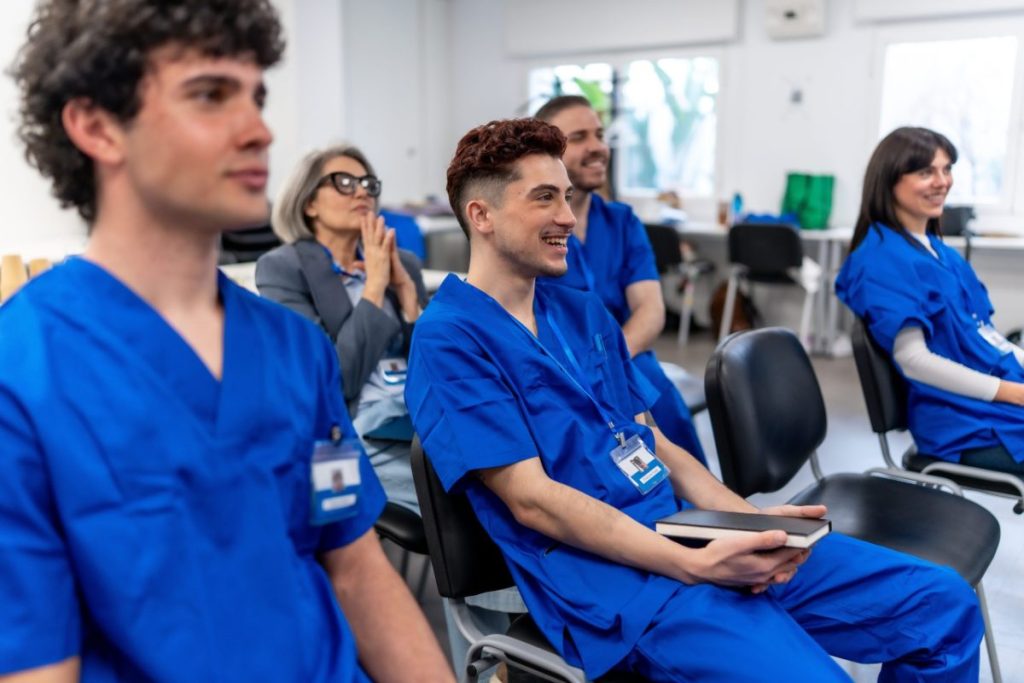
Local scholarships are awards funded by people, families and organizations in your own county, and they are usually the best odds a student will ever get, because you are competing against a few dozen classmates rather than the whole country. In Miami County, Kansas, eleven of them are held at the Miami County Community Foundation, and almost every one is applied for through your high-school counselor. If you have been searching “local scholarships near me” from Paola, Osawatomie, Louisburg or La Cygne, that counselor’s office is the answer, and this guide explains why.
The Local Scholarships Held at Miami County Community Foundation
These are the awards the Foundation currently publishes. Most of them are between $500 and $3,000. Read the eligibility column closely – several of these are narrower than they look, and the narrow ones are the ones with the shortest applicant lists.
| Scholarship | School | Amount | Who it is for |
|---|---|---|---|
| D.O. Smith Memorial Scholarship | Any Miami County school | $3,000 a year, renewable for a second year | Permanent residents of Miami County, meaning the family home is in the county, who hold CNA certification and/or have been accepted into a nursing program. Special consideration for applicants working in a Miami County hospital or nursing home |
| Steve Pepoon Memorial Scholarship | Paola | $1,000 | Current Paola High School seniors pursuing writing, screenwriting, playwriting, film, TV, media arts or theater, with a GPA of 2.5 or higher |
| Johanna Vickrey Nursing Scholarship | Louisburg | $750 | Students entering nursing |
| Miami County (MICO) Youth Leadership Council Scholarship | Louisburg, Osawatomie, Paola | $500 at each school | Council members in their senior year. This one is not applied for – see below |
| Bill McNatt / Louisburg United Methodist Church Scholarship | Louisburg | $500 | Louisburg High School graduates going on to an accredited junior college, college, university, or trade or technical school |
| Suzy Wilcox Education Scholarship | Paola | $500 | Students committed to education and inclusion |
| Jenny Jo Paulsen Cosmetology/Art Scholarship | Paola | $500 | A graduating Paola High School senior in cosmetology and art (painting) |
| Shifting Gears for Regan Memorial Scholarship | Paola | $500 | Paola High School seniors affected by suicide and/or mental illness, either themselves or through a family member |
| Stomp Out Suicide Scholarship | Osawatomie | $500 | A graduating Osawatomie High School senior. Added in 2026, in memory of Joshua McQuay |
| Jennifer Gander Memorial Scholarship | Osawatomie | $1,000 | Osawatomie High School seniors. Teachers at the school choose the recipient, at their discretion |
| George H. Diehm Music Education Scholarship | Paola and Prairie View | $1,750 | One recipient a year across the two schools, in music or music education |
Four high schools are covered: Paola, Osawatomie, Louisburg, and Prairie View High School in La Cygne. Paola students have the widest choice; Osawatomie and Louisburg students each have three awards written specifically for them. The D.O. Smith Memorial Scholarship is the largest, the only one open across the whole county, and the only one that can run for a second year – $3,000 a year, with the second year possible but not automatic, and it is also the one where the eligibility wording does real work – residency is defined by where the family home is, and the CNA or nursing-program requirement is not optional. The current list, with the Foundation’s own descriptions, sits on the grants and scholarships page.
How to Apply: Everything Starts With Your Counselor
There is one route, and it is the same for almost every award in that table. As the Foundation’s executive director, Tammy Booe, puts it: “On every one of the scholarships, they apply through their high school with their counselors. They don’t come directly to our website. They go through their school. And that’s on every scholarship we have.”
That is deliberate. The Foundation hosts no application forms on its website for any scholarship, because the schools run the applications. Practically, this means three things:
- Go to your counselor’s office and ask which of these you are eligible for. That single conversation is the whole first step.
- Do not mail an application to a bank, to a named individual, or to the Foundation. Any instruction you find online telling you to do that is out of date.
- If you are a junior, ask now rather than in the spring of your senior year. Some of these reward a record you have to build first.
The one exception is the Miami County (MICO) Youth Leadership Council Scholarship, which is not applied for at all. Counselors select four seniors and four juniors at each of the three schools – 24 students in total – and the Council itself votes on one senior per school at its March meeting. It is a year-long program, not a form: monthly meetings, a philanthropic project, and students sitting in on Foundation board meetings. Tammy Booe describes the vote this way: “You get chosen to be on it, and then depending on how much leadership, accountability, engagement, self-motivation, optimism, positivity you show during this year-long project, then everybody votes at the end of the year on it.” A younger student who wants to be considered can put their name forward to their counselor.
When Applications Open and When Winners Are Named
There is no single county-wide deadline. Each school runs its own scholarship calendar, and those calendars generally run from January to March. Selection happens in April. Two consequences follow from that, and they are the ones students most often miss:
- Your deadline is your school’s deadline, not the Foundation’s. Ask your counselor for the date in writing. For the whole year laid out season by season, see our guide on when to apply for college scholarships.
- By January of your senior year, the record you are applying with is already mostly written. Grades, service hours and the activities that show leadership are built over years, not over a winter break.
What Makes a Local Scholarship Application Competitive
Local awards are not won with the same tactics as national ones. The people reading your application may know your school, your teachers and sometimes the person the scholarship is named after. Specificity beats polish.
- Match the fund’s actual purpose. Every one of these scholarships exists because someone cared about a particular thing – nursing, storytelling, music, mental health, teaching, cosmetology. Say plainly how your plans connect to that thing, and say it in the first paragraph.
- Read the criteria literally. If an award asks for CNA certification or acceptance into a nursing program, that is a requirement, not a preference. Applying without it wastes your time and the committee’s.
- Apply for the small ones. Local awards have small applicant pools, which is the whole reason they are worth your time. Several $500 scholarships stacked together beat one national award you are unlikely to win.
- Bring evidence, not adjectives. “I organized the food drive that collected 900 items” does work that “I am passionate about service” does not.
- Build the service record early. Several of these awards weigh community involvement, and a sustained commitment reads very differently from a scramble in November. If you are looking for somewhere to start, our guide to volunteering in Miami County covers where local organizations actually need help.
- Ask for recommendations weeks ahead. Teachers write better letters when they are not writing them overnight, and counselors are handling every senior in the building at the same time.
- Have someone else read it. Not for typos – for whether a stranger can tell what you want to do and why this particular scholarship should fund it.
How to Find Local Scholarships Near You
The Foundation’s awards are one slice of what is available in a county like this one. Most local money is never listed on a national search site, which is exactly why local scholarships stay winnable. Work through these in order, starting closest to home:
- Your counselor’s office. It is the clearing house for everything local, including awards that are never advertised online.
- Your school district and its booster or alumni groups. Many districts hold awards that are separate from anything a foundation administers.
- Your parents’ employers and unions. Employee-dependent scholarships are easy to overlook, and the applicant pool is limited to employees’ families.
- Chambers of commerce, civic clubs, churches and veterans’ organizations in Paola, Osawatomie, Louisburg and Spring Hill.
- Local banks and credit unions, which frequently administer trusts and scholarships set up by local families.
- The college you are heading to. Ask its financial aid office about institutional and departmental awards, which are separate from anything your high school runs.
- State of Kansas awards. The Kansas Board of Regents publishes the state’s scholarships and grants, from the Kansas Education Opportunity Scholarship for first-generation college students to the need-based Kansas Comprehensive Grant, which has no separate application and is awarded through your FAFSA.
- Federal aid. Scholarships sit on top of it, not instead of it. Start at the FAFSA site and file as early as you can.
One warning as you search: a legitimate scholarship never charges you to apply. The Federal Trade Commission’s guidance on scholarship scams is plain about it. If anyone asks for a processing fee, or for your bank or card details to “hold” an award, walk away.
For Families Who Want to Start a Scholarship Here
Every award in the table above exists because somebody decided it should. Many of the funds held at the Foundation began in memory of someone, and an expendable fund starts at $1,000 while an endowed fund starts at $10,000. If that is the side of the desk you are on, the mechanics and the timeline are set out on the Foundation’s page on how to start a scholarship fund, and the federal rules that shape eligibility and selection are covered in our guide to the IRS rules for setting up a scholarship fund.
Most of these awards ask for an essay, and the scholarship essay examples show what a local committee responds to. If you are starting from a blank page, how to write a scholarship essay walks through it step by step. If you are a senior working against spring deadlines, how scholarships for high school seniors work lays out the calendar. Organizations applying for grants rather than scholarships should start with the grant proposal template and the Foundation’s tips for grantmaking.
Local Scholarships Near Me: Common Questions
Where can I find local scholarships near me?
Start with your high school counselor. In Miami County, almost every scholarship held at the Foundation is applied for through the counselor’s office, and counselors also hear about local awards that are never posted online.
Can I apply for Miami County Community Foundation scholarships online?
No. The Foundation hosts no application forms for any scholarship. Applications run through each high school on its own calendar, generally between January and March, and recipients are selected in April.
Are small local scholarships worth applying for?
Yes. A $500 award with a short applicant list is often a better bet than a national prize thousands of students enter, and several small awards can be stacked toward the same year’s costs.
Should I pay a service to find scholarships?
No. You never need to pay to apply for a scholarship, and a guaranteed award or an upfront fee is a sign of a scam. Your counselor and the FAFSA are both free.
Your Next Step
If you are a student or a parent, the next move is a five-minute conversation with the school counselor about which of these eleven you qualify for and when your school’s deadline falls. If you are a counselor and something on this page does not match what your school is administering, or you think an award is missing from the list, tell the Foundation – the list is maintained, and it should be right.