
Your fall dinner cleared $4,200. The committee is pleased, the kitchen team is wrung out, and somebody has already said the quiet part out loud: we have to do this again next year.
That is the honest problem with most church fundraising ideas. They work. They also expire the moment the tables are folded away, which means the same six people are back in the same kitchen twelve months later, raising the same amount, for the same reason.
If you want the list first: a standing designated offering, a church cookbook, renting out your hall or lot, one hard-push dinner or auction a year, and a youth car wash. Those are the church fundraiser ideas that reliably pay for a small congregation, and each one is below with what it costs you in volunteer hours.
This is not an argument against the dinner. Dinners are good. It is an argument for asking a second question about every fundraiser your church runs, which is: what is still here a year from now?
Some ideas answer that question well. Some answer it badly. And a few change the answer permanently, because the money stops being income and starts being a fund. That last group is the one almost nobody writes about, so it gets the most room here.
Small Church Fundraising Ideas That Don’t Burn Out The Same Six Volunteers
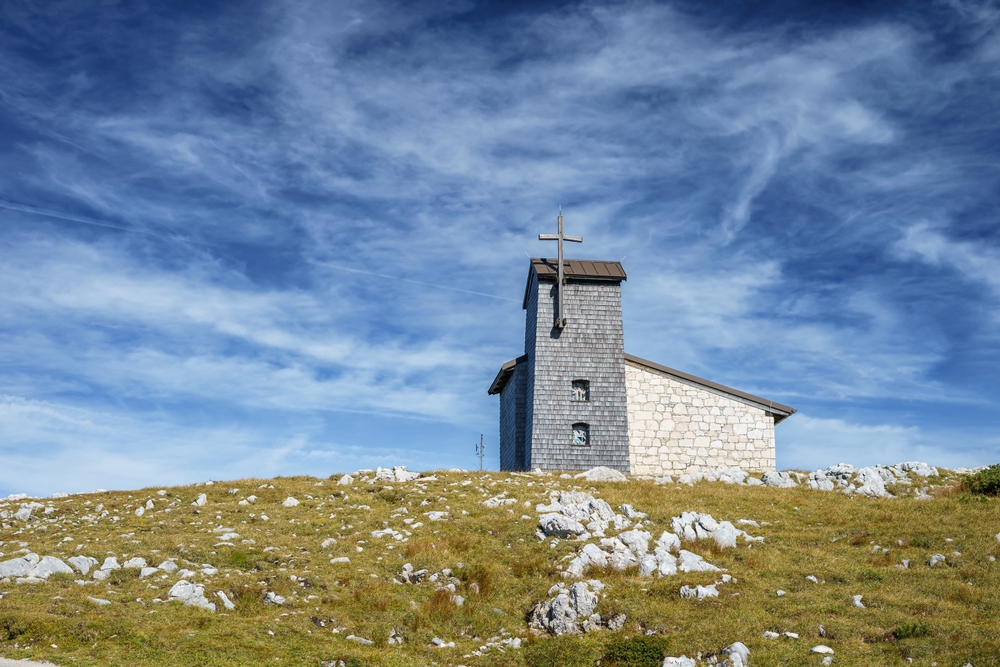
If your congregation feels small, it is worth knowing that small is now the norm. Between 2000 and 2020 the median weekly worship attendance in American congregations fell from 137 people to 65, and 65% of congregations now have fewer than 100 people in worship on a given weekend, according to the Faith Communities Today 2020 national survey.
That changes which small church fundraising ideas are realistic. With 65 people in the pews you do not have a labor surplus. You have roughly a dozen people who say yes to things, and you are spending them.
So rank the fundraising ideas for church budgets this size by volunteer hours per dollar rather than by novelty:
- A standing designated offering. One Sunday a month, marked for one purpose. Almost no labor, no setup, and it compounds quietly. The single highest-return line on this list.
- A church cookbook fundraiser. Assembly is one hard push. After that it sells at every event you hold for the next three years without anyone doing anything.
- Renting your lot or your hall. If your building sits near where a town event happens, that is revenue for the cost of unlocking a door. Congregations near Park Square in Paola have the Roots Festival, Music and the Market, and the Halloween Parade on their doorstep.
- Trivia night or a pancake breakfast. Genuinely good at building community. Modest at raising money. Run them for the first reason and treat the second as a bonus.
- The one-hard-push event. Your dinner, your auction, your rummage sale. Worth doing. Just be honest that it is the most expensive thing on the list in hours.
The youth group question
Church youth group fundraising ideas follow a different rule, because the labor is the point. A car wash that nets $600 has also given fifteen teenagers an afternoon of working toward something together, and that is not a side effect.
Fundraising ideas for church mission trips run into a specific trap: the trip is funded from zero every spring. Families front the money, the youth leader runs four fundraisers in five months, and the students who most need the trip are the ones whose families cannot cover the gap. A standing fund for youth travel does the same job without the annual scramble.
What Church Fundraising Events Actually Cost
Here is the number that should reframe the whole conversation. Across American congregations, special fundraisers account for about 6% of total revenue. Individual contributions account for 81%, and 40% of congregations receive essentially their entire annual revenue from individual donations alone. Those figures come from the National Study of Congregations’ Economic Practices, conducted by NORC at the University of Chicago, which put median congregational revenue at about $169,000.
Six percent. For most churches, every raffle, dinner, auction and car wash in the calendar year adds up to six cents on the dollar.
Meanwhile the spending side barely moves. Roughly half of a typical congregational budget goes to staff compensation and about a quarter to the building, according to the Lake Institute on Faith & Giving. Those are fixed costs. They arrive whether or not the dinner sells out.
So church fundraising carries a cost most committees never put on paper: it consumes your scarcest resource, which is willing volunteers, to move a number that was never going to close a structural gap. The Faith Communities Today survey found a median congregational budget of $120,000 in 2019 and 24% of congregations running a deficit.
None of which means stop. It means the fundraiser should be doing a job that the offering plate cannot do, rather than quietly substituting for it.
Church Fundraising Ideas, Sorted By What Happens The Day After
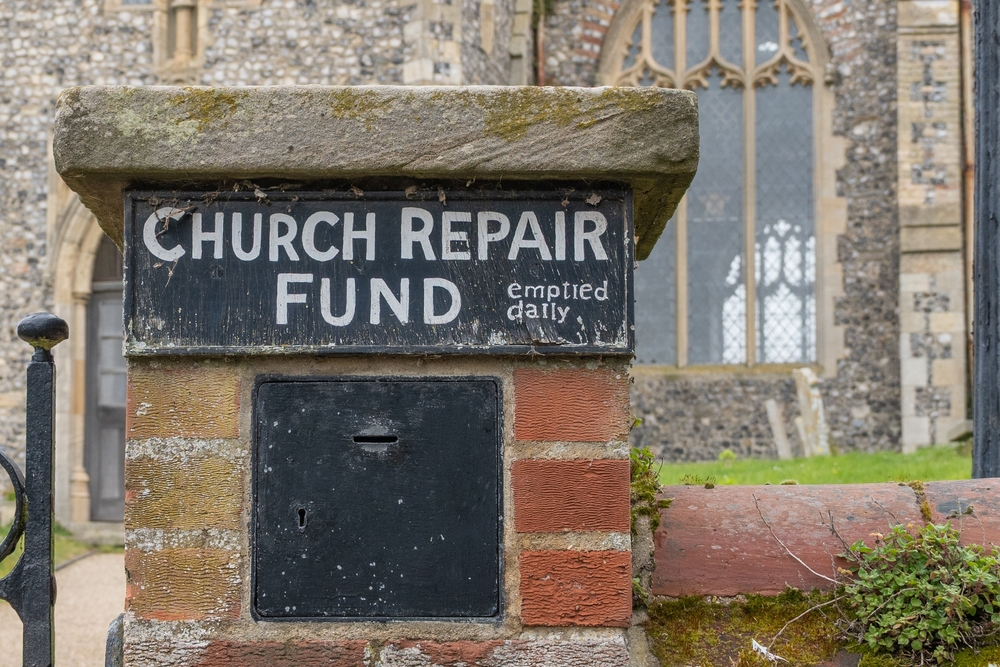
Try grouping every idea on your list into three buckets. Not by how much it raises, but by how long the money lasts.
Bucket one: spends this year. The dinner, the auction, the car wash, the rummage sale. Cash in, cash out, gone. Perfectly good for fundraising for church building projects, a roof repair, or a specific family in need. The defining feature is that next year starts at zero again.
Bucket two: spends every year. Recurring giving, a monthly designated offering, the cookbook that keeps selling. Less dramatic, and it removes the annual scramble. It is the same arithmetic that separates a monthly donation from a one-time gift.
Bucket three: spends forever. This is the bucket most small congregations skip, and it is the one with the best arithmetic.
About 34% of American congregations hold an endowment, and among those that do, endowment distributions supply roughly 4% of total revenue every year, per the same NORC study. Compare that honestly against the 6% your fundraisers produce. The endowment is delivering two thirds as much money, forever, with nobody in the kitchen.
The gap is not evenly spread. Fifty-nine percent of mainline Protestant congregations hold one, against 18% of evangelical Protestant and 5% of Black Protestant congregations. For a great many churches this is simply an option nobody has walked them through.
It is also more modest than it sounds. At the Miami County Community Foundation, an expendable fund starts at $1,000 and can be spent down to zero, at which point it closes. An endowed fund starts at $10,000, and the balance stays permanently invested. In the Executive Director’s words, “you never, you cannot fall below that amount.” You spend 5% of it, which on a $10,000 fund makes about $500 available each year, and the $10,000 stays where it is.
The fee is 2% in total — 1% administrative and 1% community support. Setup takes seven to ten business days, and the Foundation’s own 501(c)(3) status covers the fund, so your church is not filing anything new. If your congregation is weighing this, the Foundation’s guide to starting a scholarship fund sets out the minimums and answers eleven of the questions a finance committee usually asks.
When A Collection Becomes A Fund: The Louisburg United Methodist Church
This is not a hypothetical, and the example is local.
Bill McNatt lived in rural Paola and was a long-time member of the Louisburg United Methodist Church. He was instrumental in its youth group, volunteered countless hours mentoring young people, and went on mission trips with them. He died in May 2025, leaving his legacy to the church to support youth in the community.
The church could have spent it. Instead it established a scholarship in his memory, a narrower process than it sounds once you know the IRS rules for setting up a scholarship fund.
The Bill McNatt Scholarship is $500, awarded annually to a graduating Louisburg High School student going on to an accredited junior college, college, university, or trade or technical school. Selection weighs two things equally: extracurricular activities, leadership and work history on one side, character and community service on the other. It is presented at the Annual Awards Ceremony.
Notice what the church actually did. It converted a one-time gift into a decision it makes once a year, forever, without another fundraiser. A congregation that had run its share of dinners now has something in Louisburg High School’s scholarship list with a member’s name on it.
Churches are not unusual here. Individuals, families, businesses and churches all hold funds at the Foundation, which was established in 2007 and serves Miami County from Paola. The Osawatomie Ministerial Association fund is another congregational example, held on behalf of Osawatomie’s Christian congregations.
If your church wants to do something similar, there are two routes, both set out among the Foundation’s seven ways to give. Give online through the Donate button, which opens a drop-down of available funds.
Or mail a check — and this part matters, because it is the step churches most often get wrong. Make the check payable to the Miami County Community Foundation, write the fund name in the memo line, and mail it to Miami County Community Foundation, c/o First Option Bank, 702 Baptiste Dr, PO Box B, Paola, KS 66071. Never make a check payable to the fund itself. It is one of several things people get wrong about memorial donations.
What Your Church Can Apply For, Not Just Raise
Fundraising is one direction. It is worth knowing that money moves the other way too.
The Foundation runs three programs a congregation or youth group might qualify for, listed on its grants and scholarships page:
- Avelyn SonShine Journey is open to churches and youth groups. It does not award money. It gives away children’s bibles.
- Shifting Gears funds direct suicide-prevention training for public or private schools, with no county limit.
- Stomp Out Suicide funds suicide-prevention work in public schools across Miami and Linn County.
There is no application form, and that is deliberate. As Tammy Booe, the Foundation’s Executive Director, puts it: “That is a feature, not a gap. We do not have a form.” You email the Foundation and describe the project, and that email is the application. Say what the project is and what it will do in Miami County, how much you are asking for, whether your organization is a 501(c)(3), and who is asking.
Applications are accepted year-round, and a decision usually comes about a month later. There is no fixed size, because it depends entirely on what you are asking for. Booe’s own illustration: “Do you want five Bibles or do you want 500 Bibles?”
FAQ: Church Fundraising And Church Funds
What is the most profitable church fundraiser?
Measured in dollars per volunteer hour, recurring designated giving beats every event, because it has almost no labor cost and does not reset each January. Among one-time events, an auction or a dinner with donated goods usually nets most, since your cost of goods is near zero. But nationally, all special fundraisers combined come to about 6% of congregational revenue, so no single event is going to transform a budget.
Is our church tax exempt, and can donors deduct what they give?
Yes, in most cases, and without paperwork. The IRS states that churches meeting the requirements of section 501(c)(3) are automatically considered tax exempt and are not required to apply for recognition. Donors may claim a charitable deduction for gifts to such a church even where it has never sought IRS recognition. Many churches apply anyway, for credibility with donors and grantmakers.
How much money does a church need to start a fund?
At the Miami County Community Foundation, $1,000 opens an expendable fund and $10,000 opens an endowed one. A single memorial gift, one strong year of a designated offering, or a dinner run for three years toward one purpose will all get a congregation there.
Can a church start a scholarship instead of running a scholarship fundraiser every year?
Yes, and the Louisburg United Methodist Church is the local example. Once the fund exists, the award happens annually without a fundraiser attached to it. One point worth knowing before you plan: almost every scholarship in the county is applied for through the student’s high school counselor rather than through the Foundation’s website, so your church’s award reaches students through the school.
Can our congregation add to a fund after it opens?
Ask the Foundation directly at (913) 404-7287 or info@micocf.org. This is exactly the kind of question the seven-to-ten-day setup conversation is for, and the answer shapes whether you route each year’s collection into an existing fund or open your own.
If the congregation wants a separate organization, how to form a nonprofit covers the setup, and the nonprofit and not-for-profit labels are explained separately. If the congregation thanks a guest preacher or organist with a gift, how an honorarium works covers it.
Conclusion
Run the dinner. Congregations have fed their towns for a very long time and that is worth something the accounts do not capture.
But sort your church fundraising ideas honestly, into what spends this year, what spends every year, and what spends forever. Most churches have plenty in the first bucket, a little in the second, and nothing at all in the third. Filling the third bucket once is the only move on the list that makes next year easier instead of identical.
Bill McNatt’s church started with a single gift and a decision not to spend it. Yours could start with one good year of the offering you are already taking.
Talk to the Miami County Community Foundation about what your congregation already has. Call (913) 404-7287, email info@micocf.org, or see the funds the Foundation currently holds to get a sense of what a church-founded fund looks like in practice.