
Someone you knew has died, the obituary asks for donations instead of flowers, and you are stuck on one number. Is $25 enough? Is $200 too much for a coworker you liked but barely knew?
There is no official memorial donation amount, and nobody is checking. A sensible starting point is what you would have spent on flowers, and less is fine if that is what you can afford.
This guide covers the rest: what funeral etiquette actually expects, how to size a gift to your relationship and your budget, the amounts the IRS cares about, and what it takes for many small gifts to become a fund that lasts. It comes from the Miami County Community Foundation in Paola, Kansas, where many of the funds began after someone died.
Is there a standard memorial donation amount?

No. There is no standard memorial donation amount, no published scale and no rule that families or charities follow. The etiquette guides land in the same place: give what is meaningful to you and comfortable for your budget.
Legacy.com’s guide to making a memorial donation says a gift can be as small or as large as you like. If money is tight, it says, even $5 is an appropriate amount.
In practice, three things set the figure:
- How close you were. A neighbor and a sibling are not expected to give the same.
- What you can afford this month. A gift you will resent later is not the point.
- What the family asked for. If the obituary names a fund or a cause, the destination is settled. Only the amount is yours to choose.
That last point does a lot of the work. Once you know where the money is going, the question shrinks from “what is correct?” to “what can I give there?”
Funeral donation amount etiquette
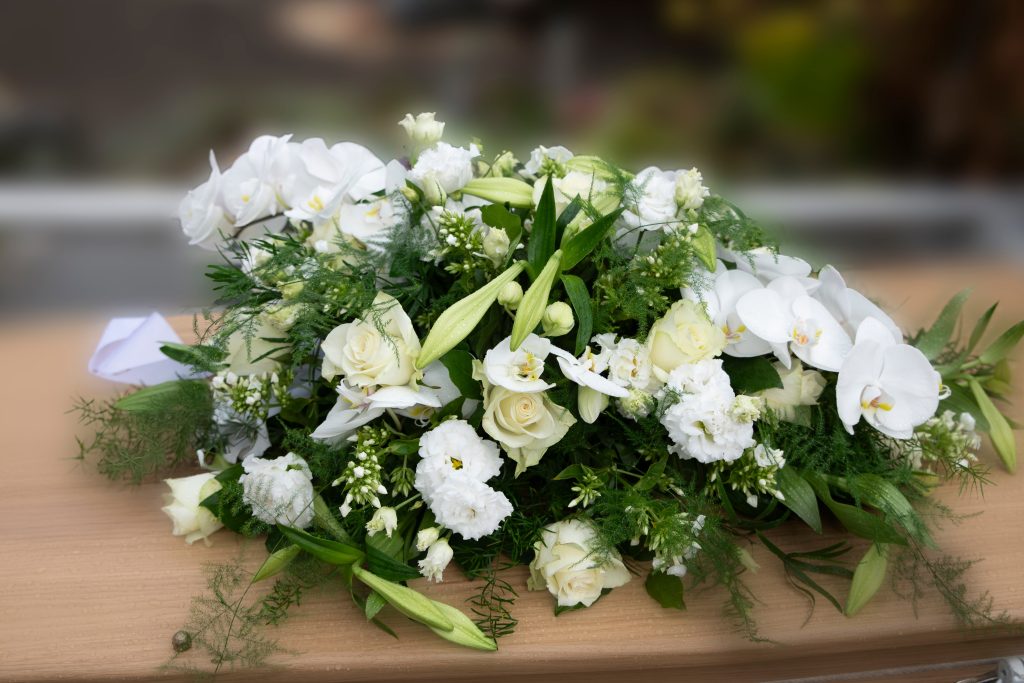
Funeral donation amount etiquette comes down to a few customs. None of them is a specific number.
Use flowers as your benchmark. The Emily Post Institute’s advice on donations in lieu of flowers is to give at least what you would have spent on an arrangement. It is a private yardstick, not a public one, and it gives you somewhere to start.
Give where the family asked. If the obituary names an organization, give there rather than to a cause of your own. Legacy.com notes that picking a different charity can come across as disregarding the family’s wishes.
If you are unsure of the exact wording a family should use, the guide on how to word an in lieu of flowers line covers it.
Say who the gift is for. Put the person’s name on the check or the online form, and include the family’s address so the organization can let them know. Emily Post also suggests confirming that the charity will actually notify the family.
Give within a week or two, but late is fine. Legacy.com suggests giving within a week or two of the funeral, so the family can thank you while they are writing notes. A gift months later is still welcome.
Consider a group gift. Coworkers, a church class or a club often pool their money. Everyone gives what they can, and it arrives as one meaningful sum with one card.
Do not send cash to the family unless they ask. Emily Post’s guidance is that cash ordinarily goes to the charity, not the family. The exception is a family facing real financial hardship, where a group collection can help.
How much to donate in memory of someone, by relationship and budget

Because nobody sets the amount, it helps to have a simple way to decide how much to donate in memory of someone. Start with the flower benchmark, then adjust for how close you were.
| Your relationship | A reasonable starting point |
|---|---|
| Coworker, neighbor or acquaintance | Roughly the cost of a modest arrangement, or a share of a group gift |
| Friend | What you would spend on a full arrangement, or more if the cause meant something to you both |
| Close family | Usually the largest gifts, and sometimes the start of a named fund |
Then check it against your budget. If the flower benchmark is more than you can manage, give less. A $10 gift with a handwritten card is not an insult, and the card is the part the family will read.
A few other things can move the number:
- The cause meant something to you too. Giving more to a cause you share is natural.
- You cannot attend the service. A gift is a way to take part anyway, and it does not need to be larger to make up for missing the service.
- Your gift will be one of many. When the family has named a single fund, every gift lands in the same place, so small amounts add up.
If you would like to recognize someone who is still living, the same approach works for a gift made in someone’s honor. Only the wording of the dedication changes.
The amounts that change what happens next
Most memorial gifts are small and simple. But a few dollar lines change the paperwork, and two change what the money can become.
Any amount: keep a record
For a cash or check gift of any size, the IRS says in Topic 506 on charitable contributions that you must keep a bank record or a written communication from the charity showing its name, the amount and the date. IRS Publication 1771 counts card payments and online payment services as monetary gifts, so a card or PayPal receipt counts as your record.
$250 or more: get a written acknowledgment
For any single gift of $250 or more, a bank record is not enough. IRS Publication 1771 says you need a written acknowledgment from the charity, received before you file, stating the amount and whether you got anything in return.
Gifts to a person are not deductible
The IRS is plain about this: gifts to individuals are not deductible. Money handed to the family for funeral costs can be a real kindness, but it is a personal gift. To confirm an organization can receive deductible gifts, use the IRS Tax Exempt Organization Search.
New for 2026: a deduction without itemizing
Beginning with tax year 2026, the IRS says people who do not itemize may deduct up to $1,000 of cash contributions to certain qualified organizations, or $2,000 if filing jointly. Whether a particular gift qualifies depends on your situation, so check with a tax advisor.
$1,000 and $10,000: when gifts can become a fund
When many people are giving in one person’s name, a family may want the gifts held together in a named fund. At the Miami County Community Foundation, an expendable fund opens at $1,000, can be spent all the way down, and closes once it is.
An endowed fund opens at $10,000. The balance stays invested and cannot fall below what was put in, and a 5% spending policy makes roughly $500 available from a $10,000 fund. The Foundation’s fee is 2%: a 1% administrative fee taken monthly and a 1% community support fee taken once, at the end of the year.
Setup takes seven to ten business days, which is longer than an obituary takes to print. If your family is weighing a named fund, look at the Foundation’s options for memorial and honor gifts and call (913) 404-7287 before the notice runs.
Where a memorial donation amount goes furthest
The size of the gift often matters less than where it lands. A modest gift added to a fund that already exists joins money with a purpose, written rules and someone accountable for it.
Many of the funds held at the Foundation began after someone died. When Bill McNatt, a long-time member of the Louisburg United Methodist Church who mentored its young people, died in May 2025, the church established a $500 annual scholarship in his memory for Louisburg High School graduates.
The Steve Pepoon Memorial Scholarship works the same way. It awards $1,000 to a Paola High School senior heading into writing, film, television or theater, in memory of an Emmy-winning television writer who grew up in Paola. Families who want something similar can read about starting a scholarship fund.
There are two ways to give to a fund. The Donate Now button on the Foundation’s site opens a drop-down of funds that take card and PayPal payments. Or mail a check made payable to Miami County Community Foundation, not to the fund, with the fund name in the memo line, to 702 Baptiste Dr, Paola, KS 66071.
Whichever route you use, add a note with the name of the person you are remembering. For the questions families ask before choosing a destination, see the mistakes families make with memorial gifts.
FAQ: Memorial donation amounts
Is $25 too little for a memorial donation?
No. Etiquette guides say any amount is appropriate, and Legacy.com puts the floor as low as $5. A small gift to a named fund also joins every other gift made in that person’s name.
Is it rude not to give a memorial donation?
No. A memorial donation is a request from the family, not a fee for attending. A card, a visit or a meal dropped off the following week are all ways to show up.
Is a memorial donation tax deductible?
It can be, if it goes to a qualified organization and you keep the right records. Gifts to individuals are not deductible, and any single gift of $250 or more needs a written acknowledgment. From tax year 2026, non-itemizers may deduct some cash gifts too; ask a tax advisor how this applies to you.
Will the family see how much I gave?
It depends on the organization. Give it the family’s address so it can send them a note, and confirm it will, as Emily Post suggests. If you want the family to know, mention the gift in your sympathy card.
Conclusion
There is no right memorial donation amount, and the people who worry most about getting it wrong are usually the ones who care most. Pick a number you can give without strain, give it where the family asked, and put the person’s name on it. Keep the receipt, and get a written acknowledgment for anything over $250.
The one decision worth making early belongs to the family: whether the gifts should stay together in a fund that keeps that name in use for years. That choice is easier the week of the funeral than the year after it.
Want your gift to stay in Miami County? Browse every fund the Foundation holds, give through the Donate Now button, or call (913) 404-7287 to talk through a memorial fund before the obituary runs.